

Blurb
Doing well with money isn’t necessarily about what you know. It’s about how you behave. And behavior is hard to teach, even to really smart people.
Money―investing, personal finance, and business decisions―is typically taught as a math-based field, where data and formulas tell us exactly what to do. But in the real world people don’t make financial decisions on a spreadsheet. They make them at the dinner table, or in a meeting room, where personal history, your own unique view of the world, ego, pride, marketing, and odd incentives are scrambled together.
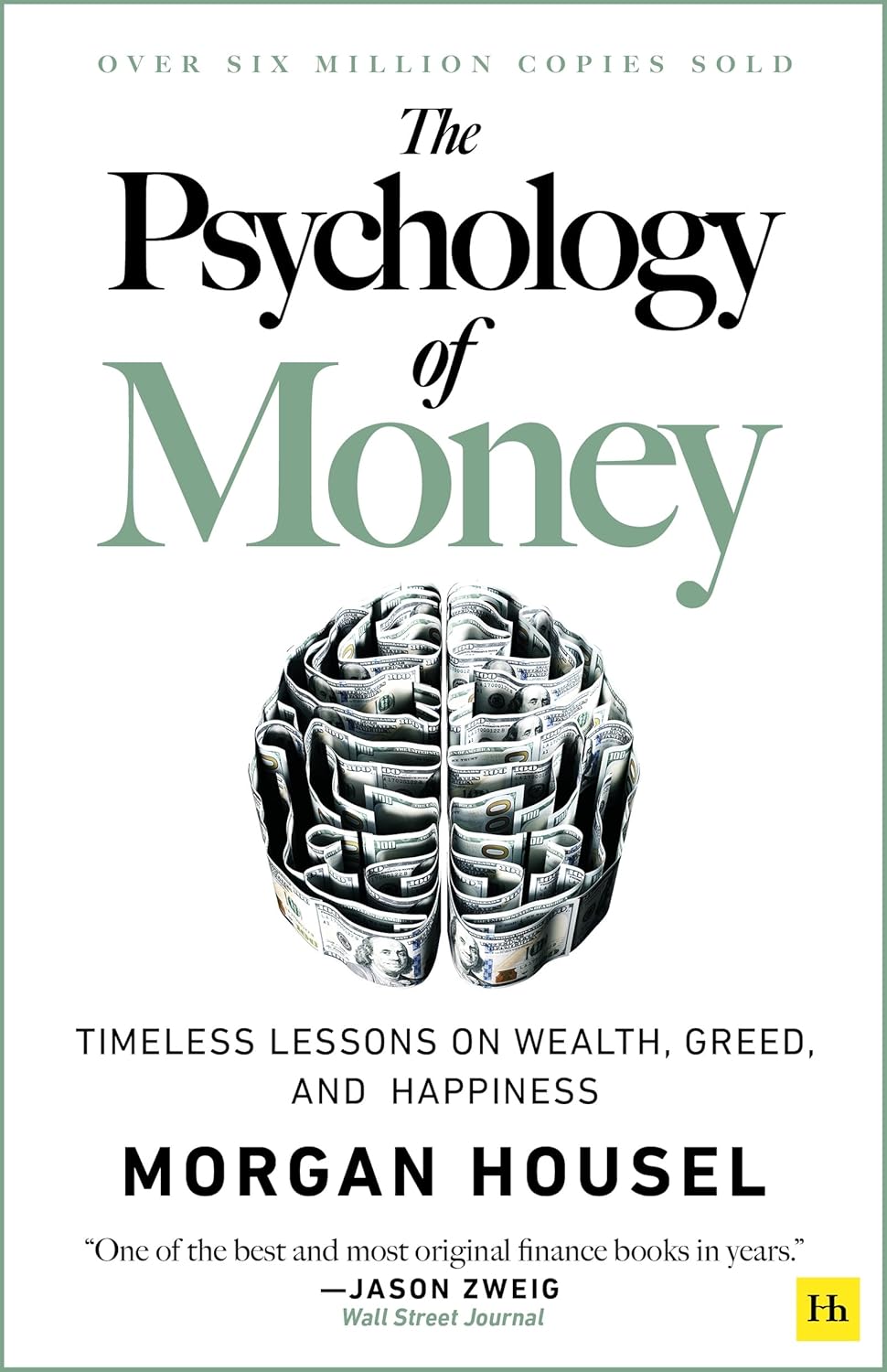
In The Psychology of Money, award-winning author Morgan Housel shares 19 short stories exploring the strange ways people think about money and teaches you how to make better sense of one of life’s most important topics.
Review
I’ve read several economics books over the years. I tend to be a macro guy. I have not, however, ready a ton of finance books. This is not quite that, but sort of is. It is a macro look at personal investing. It is not a guide for investing, but a big picture look at the mindset of planning for the future. I actually believe this should be one of the first books you should read if you are looking at getting started with investing. It lays a good foundation for how to approach the endeavor. I would recommend reading this before reading any specific strategy book. You do not get deep into the weeds here, but you good a good picture of the field.
I grew up fairly poor. I had student loan debt for 20-plus years. I had five-figure credit card debt into my 40s. I never read finance books, using the excuse I didn’t have any money to save anyway. That is sort of like saying I will join the gym after I get in shape.
Notes I emailed myself while reading:
The early strategy of the book is the simplest of concepts…just embrace the power and compounding and patience. Figure out what is your enough, both for living and saving.
Line that stuck; You can build wealth without a high income, but you have not chance of building wealth without a high savings rate. It is clear which one matters more.
On the power of just saving, no matter the market. Pessimism is easier to sell than optimism. Most people are not going to time the market perfectly or make enough over an index fund to make guessing worth their time. It is possible, but more rare than most realize.
The more you want something to be true, the more likely you are to believe a false thing that says it is. This applies to way more than investing. I’ll probably break this line of thought out in some political arguments.
Stop moving the goal post on what you want to spend just because your income goes up.
The final chapters of the book provide a concise economic history lesson.
Did the idea of income inequality and increasing debt that led to the Occupy Wallstreet ideology also lead to Trumpism? Add in social medio pressure and influence and that gap seems way wider too. We are more aware of how other people live and want what they have.
I am glad I read this one. 4 of 5 stars.
 I Am Weez