

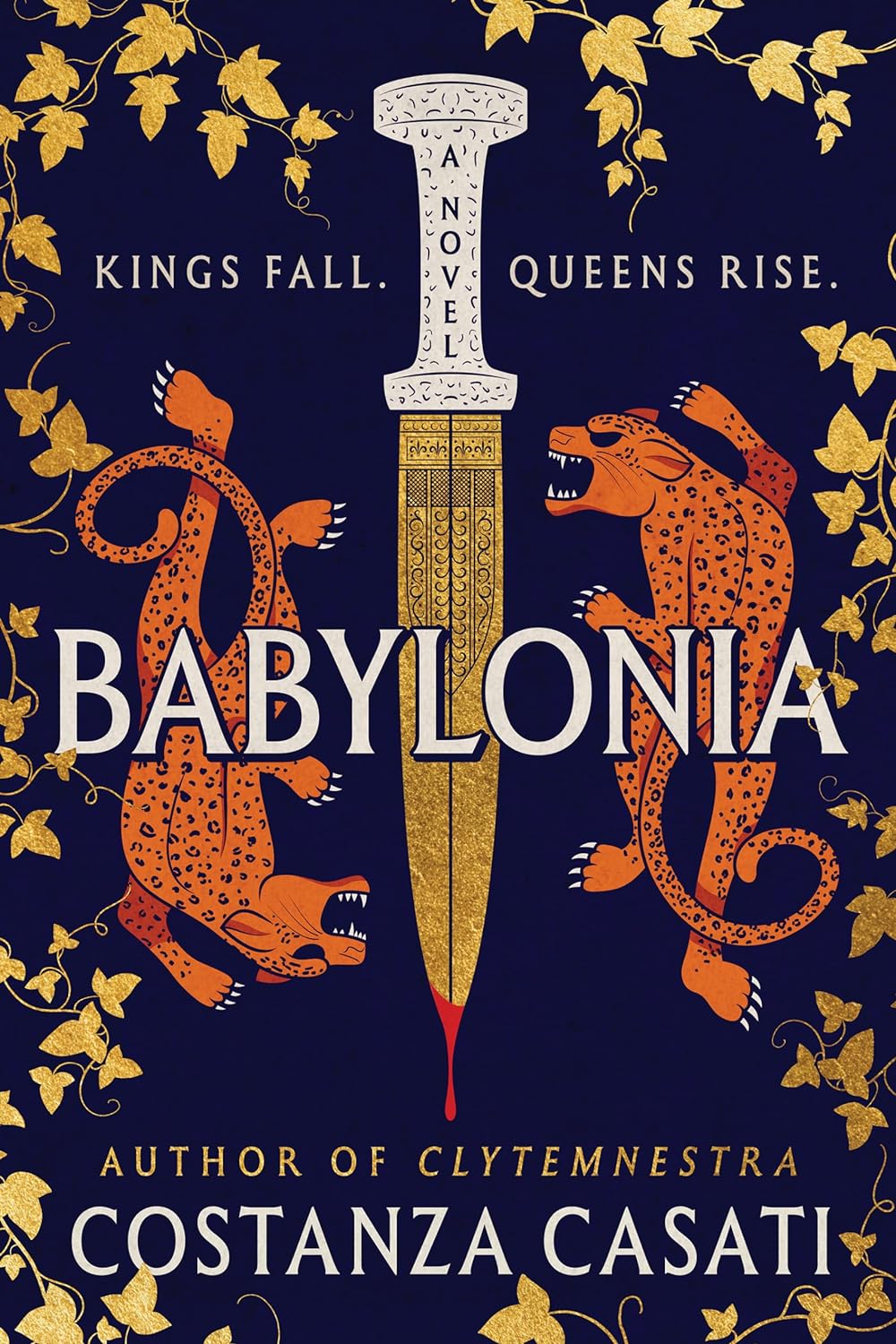
Costanza Casati’s Babylonia is a modern retelling that moves fluidly between the worlds of history and myth. At its heart lies Semiramis, the legendary Assyrian queen whose reputation has been maligned in centuries of ancient texts as the “whore queen.” Casati flips that narrative on its head, offering instead a nuanced and sympathetic portrayal of a woman whose power, cunning, and humanity resonate across the ages.
Reframing a Legend
One of the most compelling aspects of Babylonia is the way Casati re-frames Semiramis. Rather than leaning on the lurid accusations of antiquity, the book positions her as a figure of strength and complexity. She is ambitious, yes, but also deeply human, caught in the currents of empire, mythmaking, and gender politics. For readers familiar only with the caricature of Semiramis preserved by Greek and Roman sources, Casati’s interpretation feels revelatory—a reclamation of a woman flattened by history into something she never was.
The Blend of History and Myth
Casati writes with an awareness that Semiramis exists in the liminal space between fact and fable. The prose doesn’t shy away from the grandeur of myth—palace intrigue, sweeping battles, divine whispers—but it also grounds the story in historical textures that make the world feel lived-in. This half-history, half-myth approach is what gives Babylonia its spark. It reads like the kind of tale that might have been whispered in ancient courts, then polished into legend, and finally modernized into literature that feels at once timeless and fresh.
Characters That Stay With You
Sasi, the court eunuch, stands out as one of the most vivid characters in the book. He is sly, pragmatic, and oddly endearing, a political survivor in a world where most do not last long. It’s a testament to Casati’s writing that, as a reader, I couldn’t help but picture Conleth Hill’s Lord Varys from Game of Thrones. The resemblance in voice and temperament is uncanny—so much so that Sasi feels like he could step directly onto the screen in a similar role.
Style and Impact
The novel is written with a clarity and rhythm that make it both accessible and immersive. Casati balances court intrigue, character studies, and moments of mythic grandeur without bogging down in detail. The result is a story that feels sweeping in scope but also intimate in its character work. It’s easy to be swept up in the imagery of empire and conquest, but it’s Semiramis herself—reimagined as more than the slander of ancient propaganda—who lingers after the final page.
Final Thoughts
Babylonia succeeds as both a work of storytelling and an act of reclamation. It invites readers to reconsider one of history’s most maligned women, showing how myth and misogyny have shaped the way we remember figures of power. For anyone drawn to tales of ancient empires, legendary queens, or the fertile borderlands where history meets myth, Casati’s novel is well worth your time.
Rating: ★★★★☆
 I Am Weez