

Not shocking that my first favorite album of 2026 comes with Dave Cobb’s fingerprints all over it. Cobb has become the quiet architect of modern Americana, and Weapons of Beauty fits neatly into that lineage. But this isn’t a paint-by-numbers roots record. It feels carved. Sanded by wind. Written somewhere the cell signal dies and the coyotes take over.
I’ll admit, I didn’t immediately clock Jay Buchanan as a solo artist. Then he opened his mouth and it hit me. Rival Sons. That voice isn’t the kind you casually misplace. It’s cathedral-ready. Operatic Van Morrison if Van had chosen mysticism over mayhem (ahem, cocaine). Buchanan doesn’t just sing melodies, he ascends into them. His phrasing stacks in layers. It rises from hush to howl. The crescendos feel less like volume and more like emotional gravity.
The backstory matters here. Much of Weapons of Beauty was written in isolation in the Mojave Desert. Buchanan lived in a small underground bunker, composing by firelight. That’s not branding. You can hear it. There’s space in these songs. Not emptiness, but distance. The kind of sonic horizon where reverb feels like heat shimmer. Recorded later in Savannah with Cobb and a small Nashville ensemble, the album keeps its bones exposed. Nothing glossy. Nothing wasted.
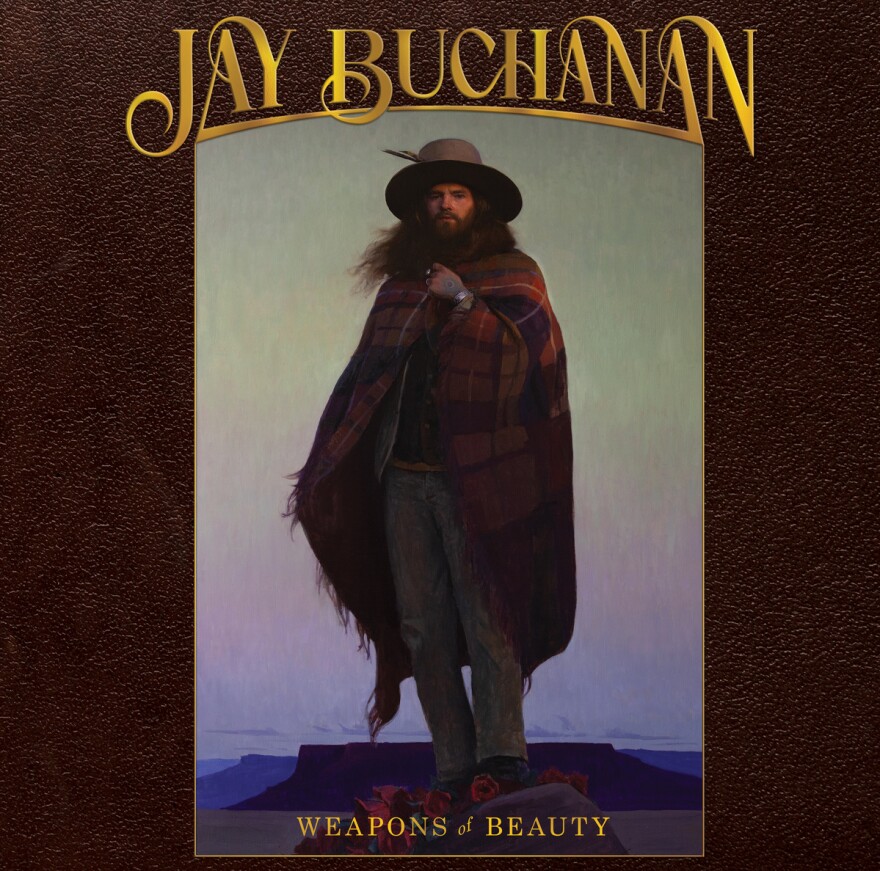
Thematically, Buchanan leans into love, landscape, solitude, and renewal without drifting into cliché. The title track, one of my seven-star cuts, feels like a mission statement. “Weapons of Beauty” doesn’t bludgeon. It glows. The arrangement blooms slowly, Buchanan’s voice climbing skyward while the instrumentation remains grounded, almost devotional. It’s Americana as meditation.
“Tumbleweeds” is the other half of what I’m calling the perfect A-side/B-side pairing. In a world where you only have time for two songs, which sounds like a dystopian streaming nightmare, “Tumbleweeds” into “Weapons of Beauty” tells you everything you need to know. “Tumbleweeds” drifts but never loses direction, Buchanan sounding both weathered and hopeful. It’s lonesome without being lonely.
“High and Lonesome” and “True Black” round out my seven-star tier. The former leans into that spiritual ache Buchanan does so well, building from intimate confession to full-throated release. “True Black” carries a darker undercurrent, proof that introspection doesn’t have to be soft. There’s steel here.
His reinterpretation of Leonard Cohen’s “Dance Me to the End of Love” could have gone sideways. Cohen’s shadow is long. But Buchanan doesn’t try to out-Cohen Cohen. He leans into the song’s romantic fatalism, lifting it with his operatic tenor while keeping the arrangement restrained. It feels reverent rather than revisionist.
“Caroline,” currently the stream leader, landed at six stars for me. Fifteen years ago, it probably wrecks me. Today, it resonates differently. That’s less a critique of the song and more a reflection of where I’m at. Albums meet us where we are.
Overall, Weapons of Beauty is a statement of intent. Buchanan stepping out from the hard-charging rock of Rival Sons into something more contemplative, more landscape-driven, more patient. Cobb’s production gives it warmth without polish, grit without grime. I have long said Cobb’s superpower is giving songs room to breathe. Less is often more with Dave.
 I Am Weez