
Note: This story was originally published in the June 4 edition of the Wayne County Press.
by Brian Turner
Back in fifth grade at Wayne City, a young McGwire Taylor once strolled up to the local sports editor with a serious question.
What did he have to do to make the front page?
A suggestion was made. Thankfully, Taylor ignored it.
Twelve years later, the former Fairfield left-hander finally found a much better answer.
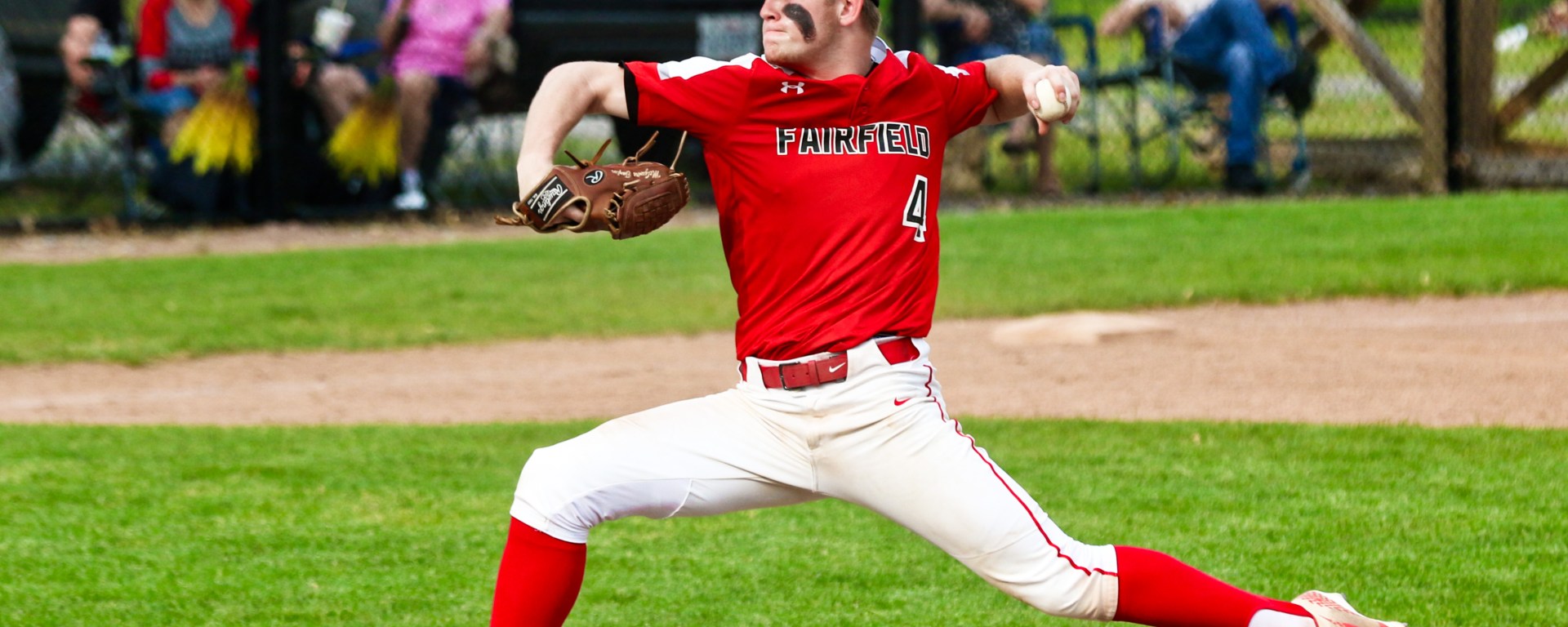
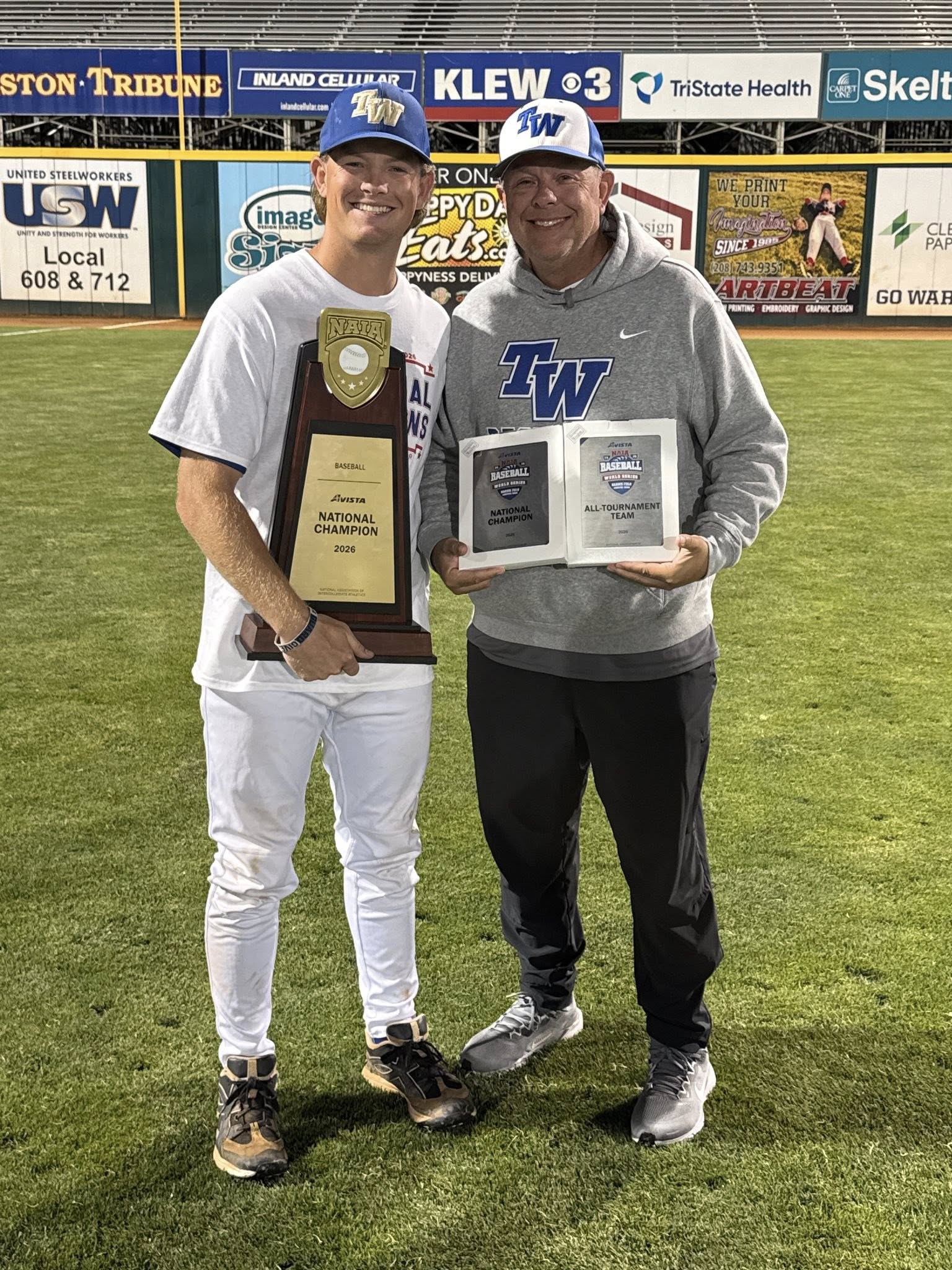
Taylor, a 2022 Fairfield graduate, started the national championship game Saturday for Tennessee Wesleyan and helped pitch the Bulldogs to the NAIA World Series title, capping a remarkable postseason run with the kind of moment small-town kids dream about and local newspapers were built to celebrate. Tennessee Wesleyan, the No. 8 seed, knocked off top-seeded Taylor University 21-3 in the championship game and brought home the red banner for the third time in program history. Taylor pitched in three World Series games, including two elimination contests, struck out a career-high 10 in a win over Johnson, and was named to the all-tournament team.
And yes, he knows the symmetry of it all.
“I made it,” Taylor said with a laugh. “And it’s for something legal.”
That line sounds like a punchline, but the deeper truth of Taylor’s story is very little about this moment was accidental. The championship game start, the all-tournament honor, the chance to take the ball with a national title on the line, all of it traces back through years of baseball, a family rooted in the game, a move from Wayne City to Fairfield, a fiercely competitive high school career, a developmental stop at Wabash Valley, a year of doubt at Tennessee Wesleyan, and a summer that helped put everything back together.
For those who watched him as a kid, the title game felt sudden only on the surface. Underneath was a long build.
Wayne City Roots
Long before he wore a Fairfield uniform, Taylor was a Wayne City kid, a Braves kid, a little brother chasing older boys around ball diamonds and trying to beat them at anything available.
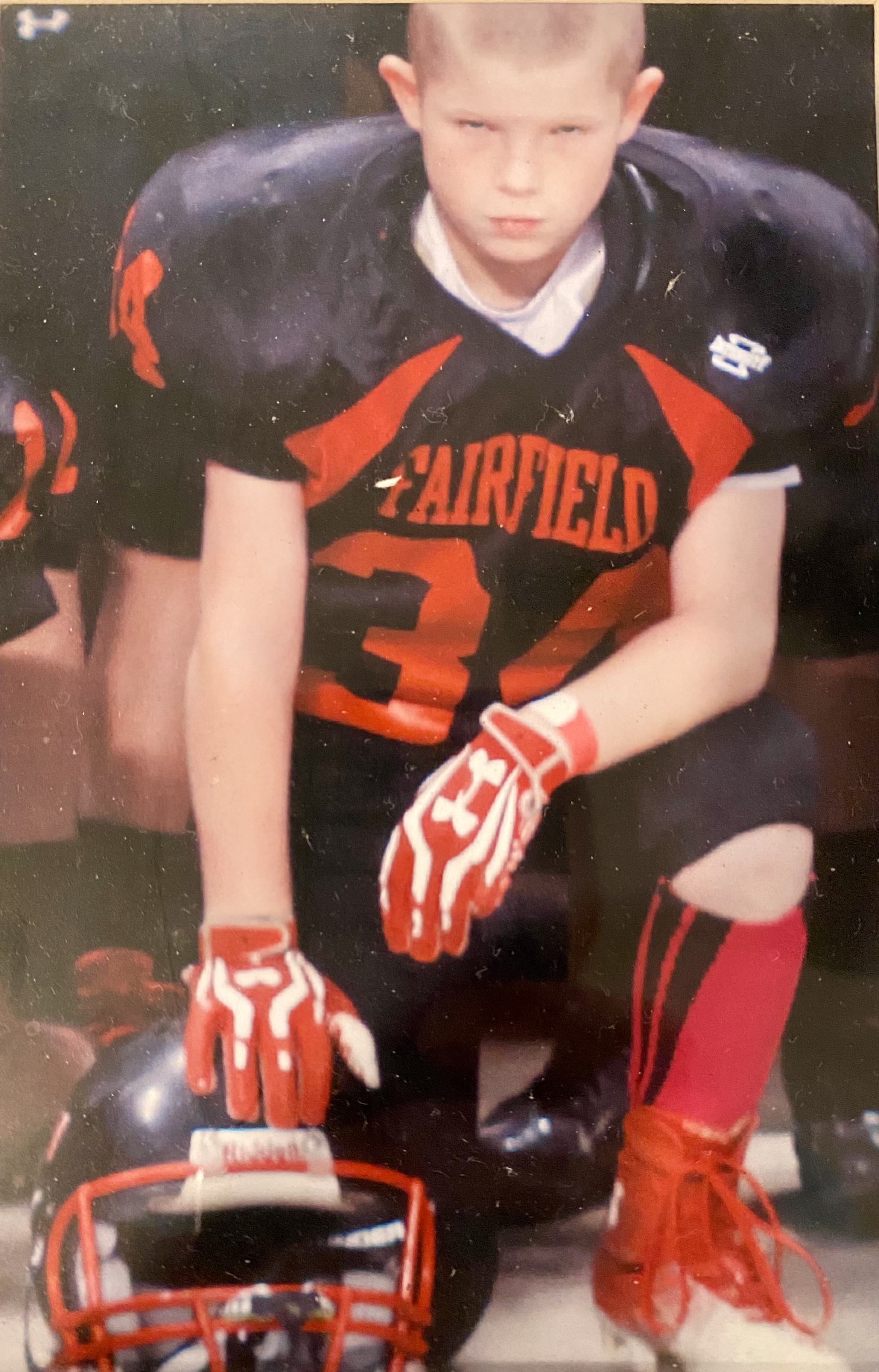
His father, Derrick Taylor, also played baseball and coached at Wayne City, and McGwire grew up with the game all around him from the start. Baseball was never a casual seasonal hobby in the Taylor household. It was language, routine, challenge and identity.
“I think it kind of just shaped a bigger version of kind of what I am today,” Taylor said. “Just a gritty kid who just loves playing the game at heart. That is kind of a small town. There is not much to do in Wayne City. My brother and a couple of their friends, we would be at the Ball Diamonds or across the street every day playing wiffle ball till the sunset. Just being outside and I think over time that just develops like a mentality of just trying to just being competitive at nature, determined to play my brother who is two years older than me and losing and getting up every day and still trying to figure out a way to beat him. I think that just installs a lot of grit and mentality that has carried me to where I am today.”
That background matters because it explains something about Taylor statistics alone never could. Even now, after college success and national attention, his baseball personality still feels deeply Wayne County. There is little flash for flash’s sake. There is edge. There is stubbornness. There is work.
Later in the interview, when asked how much of his identity still feels rooted in home, Taylor gave an answer that sounded less like a reflection and more like a personal mission statement.
“If you had to put me in a definition, it is kind of what Wayne County is,” he said. “It is kind of just a gritty, smaller town that puts their head in the nose of the grindstone and just gets after it until the job is done. I feel like that is a good way to describe Wayne County. You are not going to see the higher end flashy stuff, but that is okay. You do not need it. You can get your work done with the basic stuff. And when you do it that way, I feel like it also makes the job so much more rewarding, knowing you did not have all the handouts in the world as other people. So it kind of just creates a lifestyle for sure.”
The Move To Fairfield
When the family moved to Fairfield, the competition level changed. So did the expectations.
Taylor went from a smaller-school setting into a bigger one, first with the Colts in junior high and then with the Mules in high school. He had already crossed paths with some of the athletes through travel ball and youth football, but the shift was still real.
“It was a culture change for sure,” Taylor said. “Anytime you are going from a smaller school to a bigger school, adding a sport are playing way better competition. The exposure is at a different level. It is a step up, but I think that is kind of one thing that me and my brother always wanted in life is the next challenge. It has always been, we did this, but what is next? So, I think that is kind of all it really was, was to prove to us that we could do it. Prove we were definitely capable of doing it as well as excelling at a higher level of doing it, too.”
The transition was not just athletic. It was social, too. New school. New hallways. Better athletes. Bigger spotlight. And yet even in that adjustment period, Taylor’s internal engine seemed pointed in the same direction it always had.
“At the end of the day, I am here for a job,” he said. “And it is a personal goal to get to the next level and try to excel.”
He did more than that.
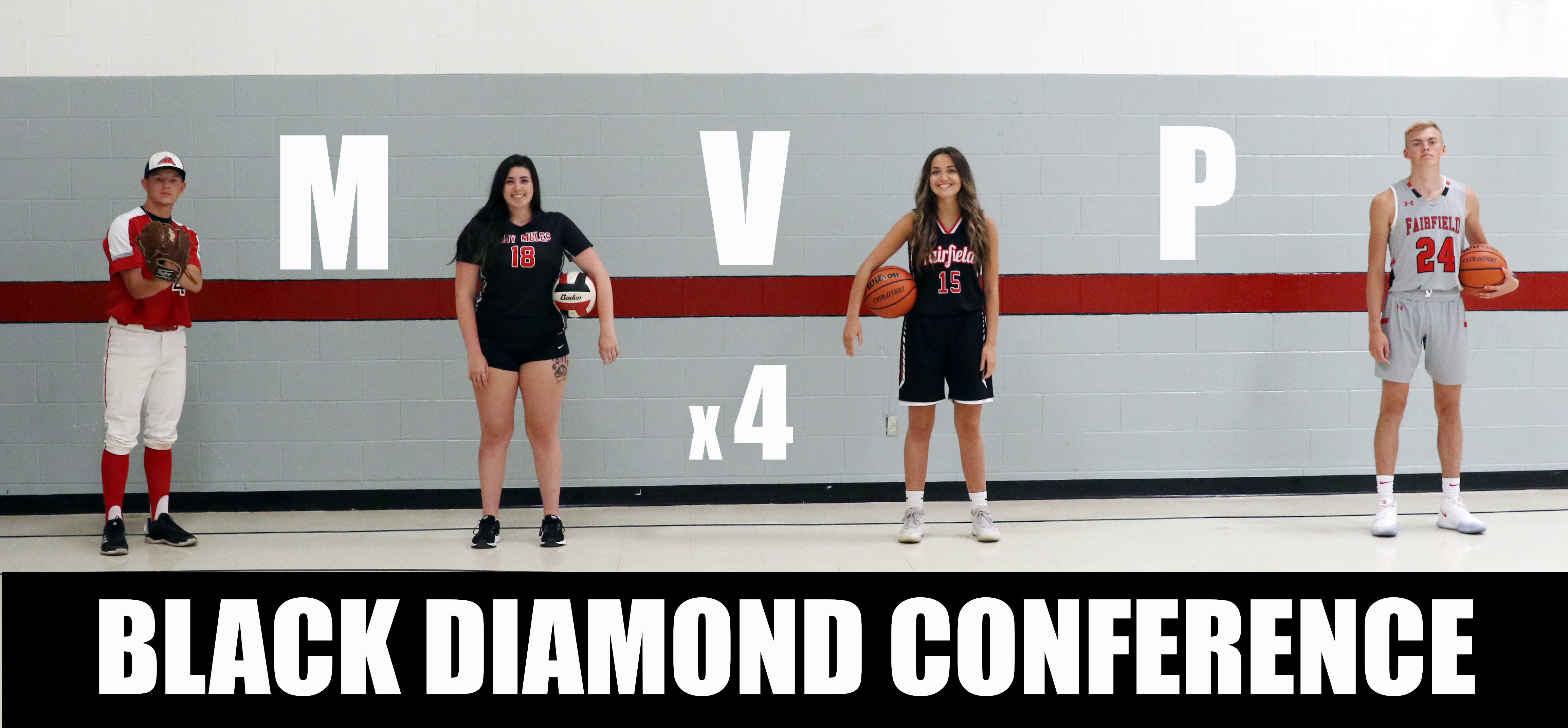
At Fairfield, Taylor became one of the area’s most decorated athletes, earning Black Diamond Conference MVP honors twice in baseball while also competing in football and basketball. He was not the biggest player in any gym or on any field, but he carried himself like he intended to leave teeth marks anyway.
That edge is one of the first things Mule coach Chris Fleener still talks about.
“When I had him, he was maybe not the hardest thrower, but he was crafty,” Fleener said. “He had an edge about him that he was going to compete, and dominate, no matter what. He had that thing where he was going to own you. He was just such a competitor.”
Fleener saw a high school left-hander in the mid-80s, not yet physically mature, but dangerous because of his attitude and pitchability.
“For a high school lefty, that was pretty dominating,” Fleener said.
He also saw a player who never really backed down from anything, a trait that could be both a weapon and a concern.
In one story Fleener shared, he deliberately got onto Taylor on the mound one time because he knew what button he was pushing.
“He was always that kid that had a ‘screw you, I will show you and shove it down their throats’ attitude,” Fleener said. “Mentally, you did not rattle him with much.”
That was the high school version of McGwire Taylor. Undersized. Angry-faced. Chip on his shoulder. Cocky enough to bother some people. Competitive enough to scare others.
And yet one of the more interesting parts of his story now is how much of that kid is still present, and how much has evolved.
Growing Up Without Softening
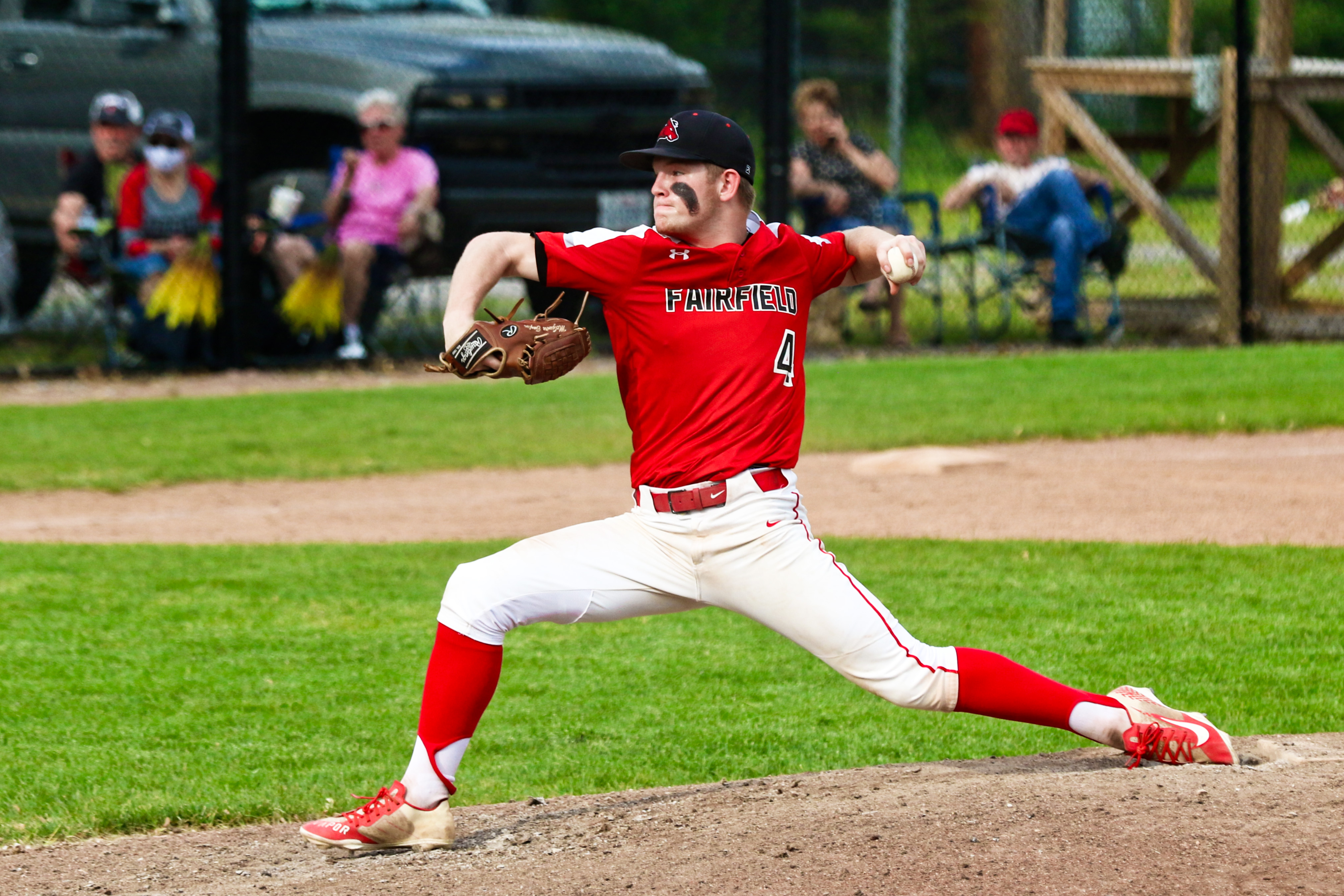
Taylor is still fiercely competitive. He still carries some of that little-man syndrome proudly. He still talks like someone who would rather challenge a bigger man than avoid him. But at 21, sitting and fielding life-pondering questions after a national championship, the edges have become more thoughtful.
He has not softened. He has sharpened.
“I think I have kind of grown,” Taylor said. “The competitiveness stays the same, but I mean, that is one of the bigger things I have had to fight with, is not trying to be like a UFC fighter on the mound, even though there is sometimes, there is a good place for it, and there are times where there is not a place. There are times where you need to go be a starter and go get me six innings worth, and not just blow all your energy in one inning.”
That maturity showed in the biggest game of his life.
“The biggest thing for me, it was just staying composed,” he said. “Do not try to blow everything out. So, for me, under the lights like that, with the people knowing what I am playing for, that was the biggest thing, and it was just kind of like a tunnel vision of just like, I am not stopping until the job is finished.”
That is a long way from just being the kid who wanted to hit the bigger boy because he was bigger.
It is still the same fire. It is just better directed now.
The Wabash Valley Years
After Fairfield, Taylor continued to Wabash Valley College in Mt. Carmel, where the learning curve steepened again.
Even as a two-time league MVP coming out of high school, he walked into junior college with a clearer sense than many players have of what he was not yet.
“I knew that I was not going to walk into that junior college at Wabash as the best,” Taylor said. “There are so many levels to it. Every single one of these kids was the best player at their school, if not the best player in their state. So then now they are coming into one team. So I think that was just the biggest thing was not only are you not the best player, there is so much potential way more ahead of you and you have to work to even get to it. There is a whole other level of grit that you have to get to just even to be where you want to be.”
Wabash helped him grow, but it did not complete him. That came later.
By the time he moved on to Tennessee Wesleyan, Taylor had already made meaningful gains. Fleener recalled hearing from him during those years about added hip mobility work and improved arm strength.
“When he was at WVC, he was telling me he started doing some more hip mobility stuff and working with them and he started to hit 91 mph,” Fleener said. “He took a 4-5 mph jump in college.”
The more he developed physically, the more his old high school competitiveness began to pair with actual college-level tools.
Still, the next stop was not smooth.
Tennessee Wesleyan And The Doubt He Had Never Felt
Taylor’s first year at Tennessee Wesleyan did not look anything like the ending.
He pitched only 18 innings. He did not establish himself the way he expected. He had outings that snowballed mentally. For maybe the first time in his baseball life, doubt moved in.
“I had a couple of outings that kind of just messed with me mentally,” Taylor said. “And after that it was kind of like an uphill climb. That for me was a really big shock, and I just felt like I was in a hole that I really could not escape.”
That matters in the story because Taylor had been the tough kid for so long that it would have been easy to assume confidence had always been automatic. It was not. Not forever. Not at that level.
His brother Cayden, now coaching at Wabash Valley, became a major part of the reset.
The Summer That Put Him Back Together
Taylor said the biggest turning point in his development came in the summer after that disappointing first year at Tennessee Wesleyan, when he played in the Northwoods League and spent time working under his brother’s guidance.
“Going up to the Northwoods and being able to spend time with my brother and be under his wing as a coach, I think that helped me grow in so many ways, mentally and physically, as a pitcher, and just helped me get back on track, ultimately,” Taylor said. “He knows the game as well as anyone, you know, from the pitching side of it, too. He is a freak when it comes to analytics, all that. He learns.”
Taylor described Cayden as someone who had to squeeze everything possible out of his own ability, a contrast to McGwire’s more natural early throwing ability.
“He has had to work for what he is doing,” Taylor said. “Everything that he has done has been, it is dicing mechanically, looking at video, constantly over-correcting stuff just so he could max out his potential, where I kind of just picked up a ball and was able just to throw it.
“So to be able to get his side of his mentality and then, plus, put that together for my physical side, I mean, I think that has made me leaps and bounds of a pitcher.”
That summer was not magic. It was work. Body work. Mechanical work. Routine work. Mental work.
“I learned a lot about the game, learned a lot about my body, learned what I need to do to get ready and to be able to prepare at the highest level,” he said. “Eating right, training right, certain movement preps just to get ready to perform at the highest level.”
He said that summer after his junior year at Tennessee Wesleyan “was really it” for him. By then, the late-blooming physical growth had come too. He laughed about being listed at 6-foot now, but he did grow after high school, and by his own telling he is a much different pitcher physically than the kid Fairfield sent off.
The result was a senior season that looked like a breakthrough: 18 appearances, 17 starts, a 10-2 record, 94.2 innings, 104 strikeouts, a 3.14 ERA and a place in the regular rotation that he had once struggled to imagine.
The Week In Lewiston
By the time Tennessee Wesleyan reached Lewiston for the NAIA World Series, Taylor already felt like his team had something different.
“We would just see spurts of it in the fall,” he said. “It was one of those things where me and Josh Shelly, who is a senior, we would look at each other and like, man, there is something that is special. It could be even bigger than last year.”
He said last year’s team may have looked better on paper. This one was better where it mattered.
“We were a true team,” Taylor said. “Like, I mean, we connected and it was kind of like one of those things, once the playoffs started, it was like, all right, let us go. Everyone hands on deck, let us just do it.”
Still, the World Series itself was chaos.
“Everything kind of just went all into one,” he said. “From there, it all kind of just seems like a blur.”
Tennessee Wesleyan played six games in five days. Taylor closed in the opening game, then later started an elimination-game victory over Johnson, when he struck out a career-high 10. By then, he was already living in the churn of the week: banquets, school visits, practice, game prep, strange time zones, quick turnarounds and mounting stakes.
Then came the sequence that changed the feature from a nice local story into something larger.
The Bulldogs beat William Carey in another elimination game that dragged deep into the night because of delays and did not end until roughly 2:30 a.m. local time. The championship game still waited the next day.
“You Want This?”
Taylor had been planting the seed already, telling his coaches he was ready if they needed him on short rest.
His coach, Billy Berry, had brushed him off after the Johnson start and told him they would talk if they got there.
They got there.
“And it was one of those things where the dugout was clearing out,” Taylor said. “He came over and just looked me in the eye and said, ‘You want this?’ I said, ‘Yes, sir.’ And he said, ‘You got it.’”
No hesitation. No fake humility. No second thought.
“Once we got that game, it was mine for sure,” he said. “Never needed a second to think about it.”
His arm, he said, felt surprisingly good. He had been living in the training room, doing everything possible to recover, and the adrenaline helped carry him early.
“I felt surprisingly good,” Taylor said. “I thought the fastball was coming out pretty well. I mean, do not get me wrong. I think the fatigueness showed after, you know, throwing 70 innings, I was pretty gassed.”
The coaches did not put a formal pitch count on him. It was more primitive and more honest than that.
“It was just one of those things like, listen, we are going to ride you until you cannot,” Taylor said.
He got through the first three innings clean, exactly as his coaches hoped, while Tennessee Wesleyan’s offense tore the game open. Berry had told him the adrenaline would get him through the first three, and it did.
“Just to be able to put up three zeros off rip like that, I think that kind of helped shift the momentum to our offense,” Taylor said. “Then they freaking cooked.”
When Berry finally came to get him in the fifth, the message was blunt.
“He is like, ‘You are gassed. I know it, I see it,’” Taylor said. “And that was a good call on him.”
Taylor left after 4 2/3 innings, five hits and three runs allowed, one out shy of qualifying for the win. It bothered him, naturally.
“It sucks I could not get it,” he said. “But I had full trust” in the reliever behind him.
Then he sat and watched the scoreboard swell.
He said he did not really relax until the lead had grown into the double digits, in part because the Bulldogs had just seen how fast a game could turn the previous day. Only when the number pushed to 11-3, then 15-3, did the reality begin to sink in.
That was when the national title stopped being a pursuit and started becoming a memory.
What It Meant Back Home
For Taylor, one of the most emotional parts of the whole run came not on the mound, but in the aftermath, when he realized just how many people back home were still following every pitch.
His father was there. His grandparents were there. Messages kept waiting on the phone. Coaches, classmates, friends, hometown people. Some had watch parties. Some texted before the game. Some reached out after. Some had not spoken to him in a while but still wanted him to know they were watching.
“It honestly kind of got me choked up a little bit,” Taylor said. “Just thinking about how many people are truly watching this back home and that care enough of and think of me enough to watch what I do and put my craft into. So, yeah, it means a lot.”
He said the first person he most wanted to see after the final out was his dad.
“Everything that you work for, you know, everything, my whole life, baseball, everything related has been, you know, for him,” Taylor said. “So to be able to, after that game, kind of shake hands with, you know, my teammates, and then I was able to just immediately see him and he was kind of down the rail. So I was able to step up and kind of just give him a big hug and just tell him I love him and I am thankful that he is here. That was kind of one of the coolest moments of my baseball career, let alone life in general.”
That scene probably belongs near the end of any feature on him, because it ties the whole thing back to where it started: a family with baseball in its bloodstream, a father who played the game himself, a son who grew up in it and then carried it all the way to the national stage.
The Legacy He Wants
Taylor’s story is easy to frame as triumph. It is a little harder, and probably more accurate, to frame it as continuation.
He does not sound like someone who believes the work is done.
“If you have the mentality there is always more to prove, you are going to get a lot further than if you are expecting that,” he said. “If you are sitting there and you play just to be a world champion, that is one of one things every year. But I think when you play for things that are bigger than that and longer than that, at the end of the day, whenever you earn something, you are going to look at it and say, OK, that was cool, but what is next.
“That was definitely a goal. And it was like, damn, I am a national champion. That was really cool to kind of think about. But I think there is just so much work to be done. There will be work to be done until it is over.”
That answer says a lot about the grown-up version of McGwire Taylor. So does the answer he gave when asked what he hopes people say about him years from now.
“The biggest thing is just I was a kid who has just been relentless, and gave it everything he had until they finally took the ball from his hand and said, hey, we are going to give it to someone else,” he said. “I hope my career is kind of looked at like in an outing. As a starter, you give him the ball and he is going to give you as many innings as he can until you tell him that he cannot or you got to go somewhere else. I think if that is the words that kind of described my baseball career, I would say I have kind of done a good job at it then.”
That is a better quote than most athletes ever manage after their careers are over, much less at 21.
And it gets to the deeper part of the story: the same undersized, angry-faced kid with the chip on his shoulder is still in there, but he has become something more interesting now. Not less intense. Just more self-aware. More composed. More complete.
Fleener sees that too.
“He is just much more physically strong now,” Fleener said. “But the demeanor on the mound is still the same. The I am gonna shove it down your throat mentality. He is going to scrap and fight. One way or another, he is going to find a way to win.”
What Comes Next
Taylor said he wants to keep playing as long as he can. He is exploring whether a fifth year is possible and already has a bullpen lined up with the Evansville Otters, with independent baseball a possible next step if college eligibility is not there.
Fleener thinks there is more baseball in him.
“I really do think he can make it to the minor league level,” Fleener said. “There is something special about him and I do not say that lightly.”
Whether that happens or not, the local significance of what Taylor just did is already secure. Former Mules have been attached to college national champions before, but not many. Payton Allen was on North Central College’s 2024 football national title roster. Bob Clayton started on Evansville’s 1971 Division II national championship basketball team. Jon Couch was also a part of that Aces squad for part of the season. Taylor now joins that rare air and, because of the role he played, probably carves out one of the strongest claims in the bunch.
But the most fitting detail of all may still be that old fifth-grade question.
What does it take to make the front page?
For McGwire Taylor, it took a childhood of Wiffle ball and Wayne City diamonds. It took a move to Fairfield. It took being the undersized kid who always wanted to hit the bigger one. It took two BDC MVP awards, junior college baseball, a summer with his brother in the Northwoods, a season of doubt, a breakthrough senior year, two elimination-game performances in Idaho, and a coach looking him in the eye before the championship and asking if he wanted the ball.
He did.
And twelve years after asking the question, he finally gave Wayne County its answer.
 I Am Weez