

There are plenty of great thrillers. There are plenty of great detective stories. There are even plenty of great stories about good versus evil.
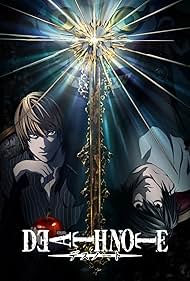
Death Note is something different.
It begins as an irresistible game of logic. A supernatural notebook gives Light Yagami the power to kill anyone whose name he writes within its pages. Opposing him is L, an eccentric detective whose deductive reasoning borders on the impossible. What follows is one of the finest cat-and-mouse games I’ve seen in fiction, where information itself becomes the battlefield. Tiny details matter. Every conversation is a chess match. Every move is met with a counter.
For much of the series, I found myself marveling at the logic. The writers consistently reward paying attention, and the pacing keeps the tension high despite relying more on intellect than action.
Then, somewhere along the way, I realized the detective story wasn’t really the point.
The notebook is simply the thought experiment.
As the series unfolds, the questions become much larger than “Will Light outsmart L?” Instead, Death Note asks whether any human being could possess absolute power without eventually confusing their own judgment with absolute truth.
What begins as a discussion about justice slowly evolves into something resembling a discussion about religion.
Light doesn’t merely punish criminals. He gradually assumes the role of a god. Society begins to debate not only whether Kira is right, but whether Kira should be worshipped. Justice becomes doctrine. Dissent becomes heresy. The investigators are no longer simply chasing a murderer. They’re challenging a belief system.
That shift elevates the series beyond the familiar debate of whether the ends justify the means.
The more interesting question is this:
Can someone remain moral after appointing themselves the sole author of morality?
Even more unsettling is how quickly people embrace certainty. Many support Kira because crime falls. Others because they are afraid. Others because believing in an all-powerful judge offers comfort. History has repeatedly shown that people are willing to trade freedom for order when the promise is convincing enough.
The genius of Death Note is that it refuses to hand you easy answers.
Instead, it leaves you wrestling with uncomfortable questions.
Does intelligence produce wisdom, or merely better rationalization?
Is a peaceful society necessarily a just one?
Does power corrupt, or does it simply reveal what was already there?
Those questions linger long after the episodes end.
In fact, that’s what separates a good story from a great one.
A good story occupies your attention. A great story occupies your idle thoughts.
Death Note belongs firmly in the latter category.
Long after turning off an episode, I found myself replaying arguments in my head, testing my own moral boundaries, and wondering where I would draw the line if placed in impossible circumstances. The show isn’t content with entertaining you. It cross-examines you.
By the time I reached the final episode, I realized something else the series had accomplished.
I genuinely didn’t know how it would end.
Not because there weren’t conventional ways to conclude the story, but because the writers had earned enough trust that I believed they might reject convention altogether. The constant one-upmanship, hidden rules, and brilliant reversals convinced me there could always be one final move left on the board.
In the end, the resolution felt earned, not because it shocked me, but because it remained true to the story the series had been telling from the beginning.
And then Ryuk delivers the perfect final line:
“Well, Light… it’s been interesting.”
No grand judgment. No sermon. No celebration.
Just the detached observation of a god who watched one extraordinary human being convince himself he was something more than human.
It’s a wonderfully ironic ending.
Light spent the entire series trying to reshape the world. Ryuk simply watched the experiment unfold.
In many ways, that’s exactly what Death Note asks of its audience.
Watch.
Think.
Decide for yourself.
That’s why I think Death Note has remained relevant for so many years. The supernatural notebook is the hook. The detective story is the engine. But the reason people continue talking about it is because beneath all of that lies a meditation on justice, power, faith, ego, and the dangerous allure of moral certainty.
The episodes are entertaining.
The conversations you have with yourself afterward are what make Death Note exceptional.
9/10 stars.
 I Am Weez