

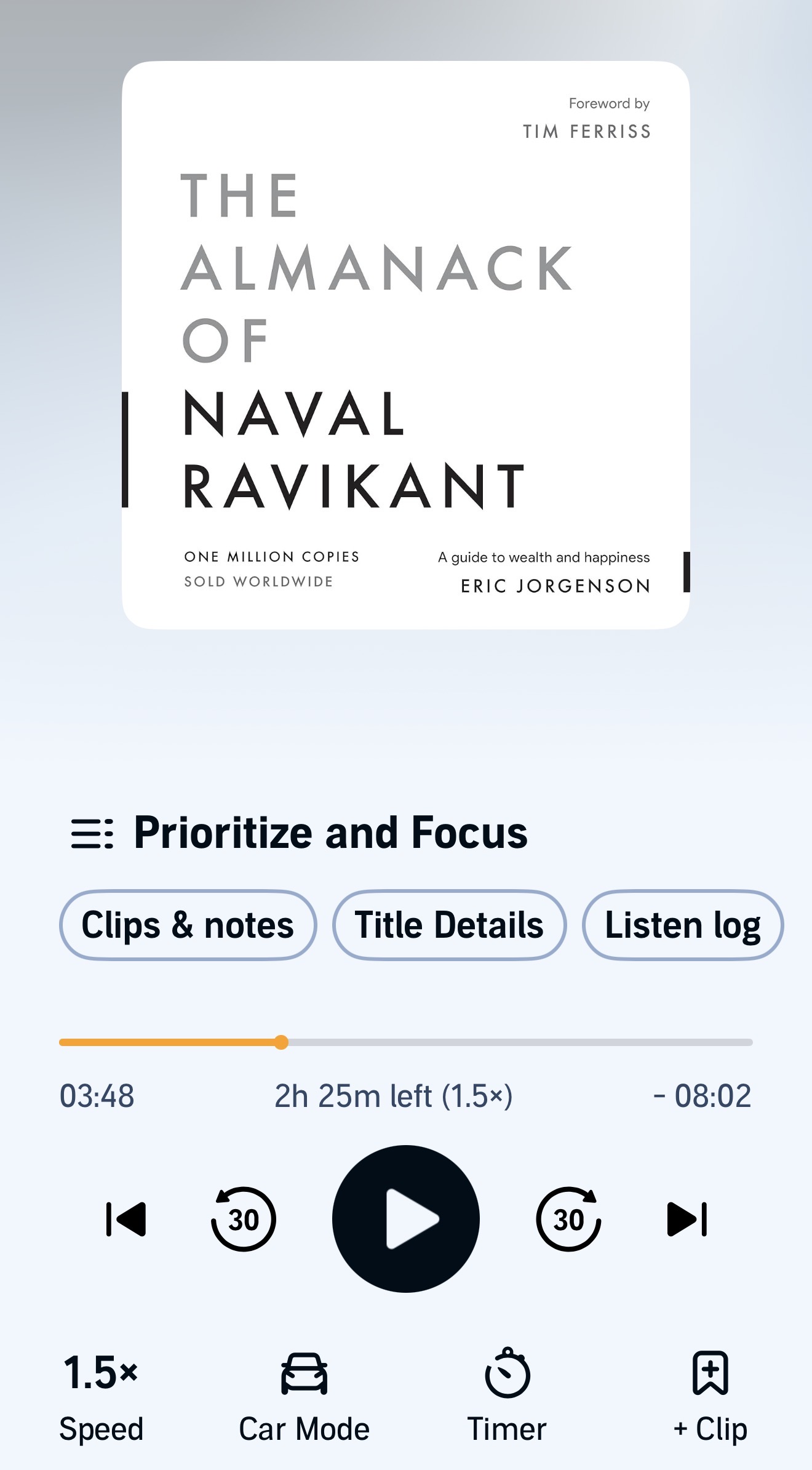
One of the ideas I’ve been chewing on while reading The Almanack of Naval Ravikant is his concept of specific knowledge.
Naval argues that wealth comes from developing knowledge that is unique to you. Skills that can’t easily be taught, outsourced, or replaced. It made me ask an uncomfortable question:
Am I spreading myself too thin?
I have more interests than I have hours in the day. On any given week, I’m coaching athletes, selling enterprise IT, reading fantasy novels, writing book and album reviews, studying for my CSCS, watching soccer, organizing golf tournaments, listening to Americana records, or diving into philosophy.
Sometimes I wonder what would happen if I simply picked one.
What if I went all in on fitness? Or books? Or music? Or technology? Or writing?
Would I become exceptional instead of merely competent across a dozen different fields?
I’ve always joked, “I don’t know a lot about a little, but I know a little about a lot.” Lately I’ve started questioning whether that’s a strength or a weakness.
The Specialist vs. The Synthesizer
Our culture loves specialists. The best surgeon. The best guitarist. The best strength coach. The best programmer. There is obvious value in digging one well instead of twenty shallow holes.
But there’s another type of expertise that seems harder to recognize. Some people don’t become extraordinary because they know more than everyone else about one subject. They become valuable because they connect ideas from many subjects. A coach who understands psychology. A programmer who understands storytelling. A musician who studies history. A writer who has spent years in sales. Sometimes innovation doesn’t happen by digging deeper. It happens by connecting dots that nobody else realized belonged on the same page.
Looking at My Own Life
When I step back, I notice something interesting. I don’t simply consume different hobbies. I carry lessons between them. Powerlifting taught me about progressive overload. That changes how I think about learning. Writing album reviews has made me appreciate narrative structure, which changes how I read novels. Greek mythology makes me notice themes hiding inside modern anime. Years in enterprise technology changed how I approach systems, which affects how I build training programs. Coaching teenagers reminds me that communication matters more than knowledge.
The subjects are different. The patterns are the same. Maybe that’s the real skill.
The Real Question
After thinking about it, I don’t believe my biggest risk is having too many interests. It’s giving all of them equal weight forever. One pursuit usually becomes the engine. The others become fuel. Fitness makes me a better coach. Books make me a better writer. Music makes me a better storyteller. Technology pays the bills while teaching me how organizations solve problems. Sports constantly remind me that people are more interesting than statistics. But statistics have taught me how to explain a story as well.None of those pursuits exist in isolation. They’re all feeding one another.
Maybe My Specific Knowledge Isn’t a Subject
Naval’s idea of specific knowledge made me realize something unexpected. Maybe my specific knowledge isn’t fitness. Or books. Or music. Or technology. Maybe it’s the combination.
There are plenty of people who know more than I do about strength training. Plenty who read more books. Plenty who know more music, more politics, more technology, or more golf.
But very few have spent decades wandering through all of those worlds and looking for the same recurring themes. Maybe my value isn’t in being the deepest expert. Maybe it’s in recognizing patterns that specialists don’t see because they’re standing too close to their own field.
A Different Way to Measure Progress
The older I get, the less interested I am in becoming the smartest person in one room. I’d rather be the person who can walk into five different rooms and still contribute something meaningful.
That doesn’t mean I should stop trying to master individual skills. It does mean I shouldn’t apologize for curiosity. Curiosity has quietly become one of the most useful tools I own. Maybe the goal isn’t to know everything. Maybe it’s to collect enough perspectives that when a new problem appears, you can reach into a dozen different shelves instead of just one.
I’m still not sure whether being eclectic is a bug or a feature. But I’m becoming convinced that if it’s intentional, and if those interests begin feeding one another instead of competing for attention, it might just become the most valuable thing about me.
So I’ll leave you with the same question Naval accidentally asked me:
What’s your specific knowledge?
And perhaps the harder follow-up:
Is it a single skill… or is it the unique combination that only you could have built?
I recently used that line mentioned above: “I don’t know a lot about a little, but I know a little about a lot.” I was given this reframing back as a suggested tweak: “I know enough about a lot of things to recognize patterns other people don’t.” I need to keep this framing in mind more often.

