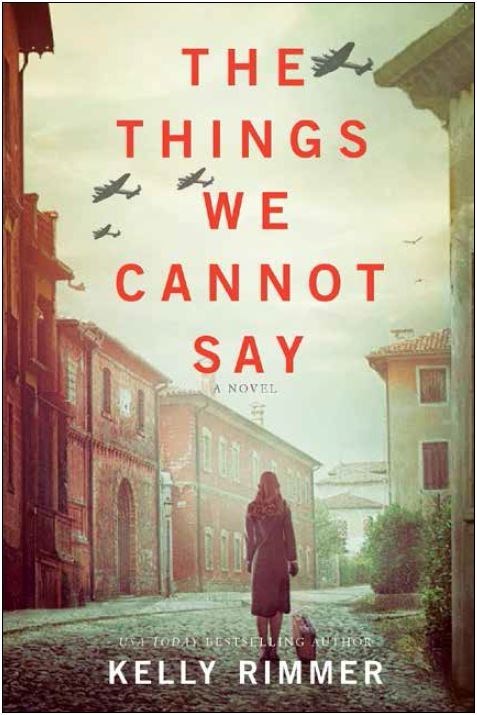
Every Christmas, Sarah and I each pick two books for the other to read the following year. We occasionally read the same things, but our tastes do not overlap all that often, so we try to choose something the other probably would not pick independently. It gives us another connection through our reading and a reason to step outside our usual selections. The Things We Cannot Say was one of her choices for me this year. I would almost certainly have walked past it on my own. I am glad she put it in my hands.
Kelly Rimmer alternates between Alice, a modern-day mother navigating the needs of her son, who is on the autism spectrum, and her grandmother’s declining health, and Alina, a young woman living in Nazi-occupied Poland. The connection between their stories gradually unfolds through family history, buried truths, and the difficulties of communicating things that desperately need to be said.
Early on, I was considerably more invested in Alina’s chapters. By chapter 11, my feeling was that this was Alina’s story, with Alice serving as the person who would eventually uncover it. I understood the purpose of the shifting perspectives, but understanding the structure did not make me equally eager to spend time in both timelines. Whenever the book returned to Alice, part of me was waiting to get back to Poland.
An unplanned overlap with something else I was watching made Alina’s story hit harder. One morning, I watched the ninth episode of Band of Brothers, in which the American soldiers discover a concentration camp, before returning to the audiobook. The soldiers struggle to believe that people living nearby could have been unaware of what was happening. In Alina’s account, she sees smoke from the furnaces but allows herself to believe it comes from boiling water for the prisoners. The reality is so horrific that she reaches for an explanation she can bear.
What stayed with me was the difference in where the two stories ask us to stand. Band of Brothers keeps us alongside the American soldiers. We meet civilians along the way, but rarely spend much time inside their lives. Rimmer lets us stay with one of the Alinas: someone whose home, family, future, and understanding of the world are being dismantled around her.
A conversation with Alina’s father made the danger of that existence particularly clear. Discussing the killing of families caught helping Jewish people, he explains how threatening someone’s children can make even a brave person reconsider helping. It is easy to imagine ourselves acting courageously when the consequences remain abstract. Being asked to gamble our children’s lives makes that confidence considerably harder to maintain. The passage gave weight to both the terror of living under occupation and the extraordinary courage required to help someone despite it.
Alice’s story eventually began to matter more to me, too. Chapter 19, an extended argument and conversation with her husband, Wade, was the first time her chapters really grabbed me. They confront hard truths about their family and themselves, including things that have been easier to resent or avoid than admit. That conversation gave me a stronger investment in Alice’s life beyond her role in discovering her grandmother’s past.
I did guess the central family mystery early. When the revelation arrived, it was essentially what I had expected. That took away some suspense, but by then I cared enough about the people that finding out how they would respond carried its own weight. One of the most affecting moments near the end came from Alice’s mother, a character I had spent much of the book finding hardened and difficult to warm to. Without giving away the circumstances, her acknowledgment that someone “did not waste a minute of the life he was given” landed heavily. Coming from her, that generosity meant more.
After spending most of the year in the sprawling world of Dungeon Crawler Carl, this felt like a considerable change of pace. Its cast is small, its focus intimate, and its story stretches across time while staying close to a few interconnected lives. I grew invested in those lives even when I could see where the mystery was heading.
This is exactly why Sarah and I exchange book selections. Sometimes she knows a book is worth my time even when I would never think to choose it.
8 out of 10 stars.