Rating: 8 of 10 stars
**Contains spoilers
I have been meaning to dive into Brandon Sanderson’s expansive Cosmere universe since reading Elantris back in 2023. I thoroughly enjoyed that book, but I also knew that once I started down the Sanderson rabbit hole, there was a good chance I wouldn’t be coming back out anytime soon. I actually purchased a collection of his ebooks a couple of years ago, but between studying for my CSCS certification and spending most of 2026 immersed in the Dungeon Crawler Carl series, Sanderson kept getting pushed down the reading list.
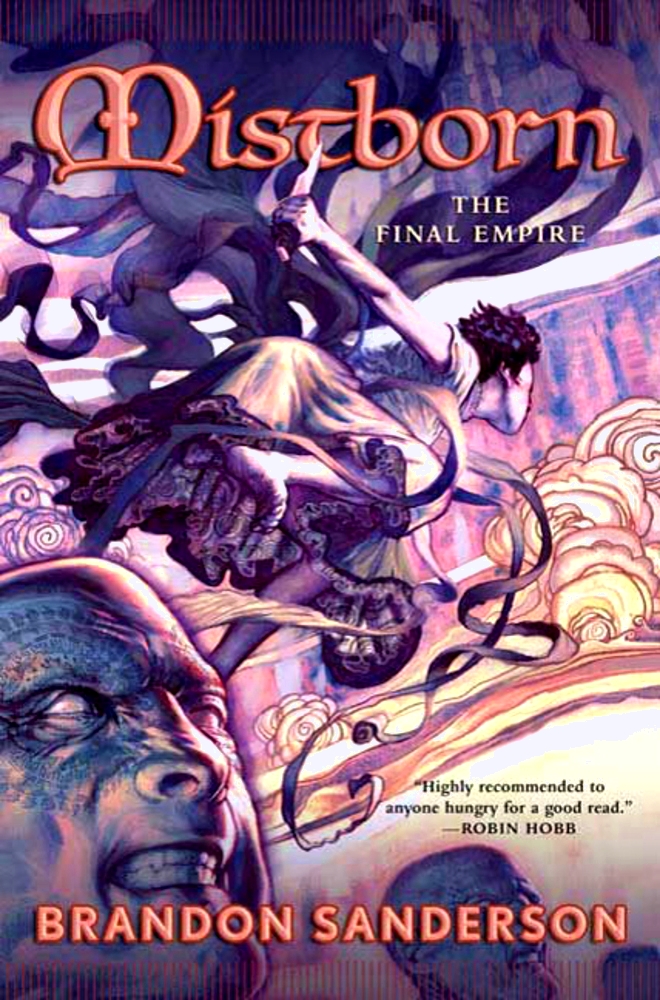
With Carl and Princess Donut finally caught up, it was time to take the plunge. I opted for the Audible edition of Mistborn: The Final Empire, narrated by Michael Kramer, and used a fan-created Cosmere reading-order flowchart to help chart my course through what promises to be a substantial literary undertaking.
The Final Empire introduces us to a world where an immortal tyrant known as the Lord Ruler has maintained his grip on civilization for a thousand years. The population is divided between a privileged nobility and the oppressed skaa, with a complex system of magic known as Allomancy playing a central role in the world’s power structure. Enter Kelsier, a charismatic revolutionary with a mysterious past and an audacious plan to overthrow the seemingly invincible ruler. Along the way, he recruits Vin, a young street thief who discovers she possesses remarkable abilities of her own.
The first half of this book is a slow burn. Sanderson spends considerable time establishing the political structure, introducing his characters and explaining the various intricacies of Allomancy. Knowing the enormous scope of the Cosmere, I expected a considerable amount of worldbuilding, but even so, there were stretches where I wondered just how long Sanderson intended to spend setting the table.
One thing I found interesting was how differently I responded to the magic system here compared to the elaborate gameplay mechanics in Dungeon Crawler Carl. In DCC, the gameplay often felt like the gimmick, something the characters had to navigate to get to the more compelling story underneath. In Mistborn, the magic feels like the point. Allomancy is woven into the political structure, the character development and the very fabric of the world. Learning its rules and limitations feels essential rather than an occasional distraction.
As the story progressed, I found myself increasingly interested in three characters for very different reasons. Vin’s appeal was in her future, watching a distrustful young woman discover not only her abilities but also her identity and her place in the world. With Kelsier, it was his past that intrigued me. What experiences had shaped this charismatic, sometimes ruthless revolutionary, and how much of his mission was driven by a desire to free the oppressed versus his own personal grievances?
Then there was Sazed, who became one of my favorite characters. A Keeper devoted to preserving knowledge of forgotten religions and civilizations, Sazed fascinated me because of his relationship with history. To me, seeking truth through knowledge of the past is itself a personality trait. In a world where so much history has been suppressed or manipulated, a character devoted to preserving it becomes particularly compelling.
And then Sanderson killed Kelsier.
Or at least appeared to. I’ve consumed enough fantasy and comic books to know that death isn’t always a particularly permanent condition when magic is involved. As they say in Marvel, nobody stays dead except Uncle Ben. His apparent death reminded me of Ned Stark’s in A Game of Thrones. It wasn’t an emotionally devastating moment so much as a genuine surprise. Sanderson had spent so much time positioning Kelsier as the central architect of the rebellion that I assumed he would remain at the center of the story through its conclusion.
What surprised me even more was how quickly everything accelerated in the second half of the novel. After spending so much time establishing the world, Sanderson suddenly started knocking down the pieces. I had fully expected the effort to overthrow the Lord Ruler to extend into at least the second book of the trilogy. Instead, Sanderson delivered a much more complete resolution than I anticipated.
And while I spent some time wondering whether Kelsier’s apparent death would prove to be another fantasy resurrection, the twist that really caught me off guard involved Marsh. That was a terrific bit of misdirection, and one I didn’t see coming.
By the end, I appreciated the structure of the novel considerably more than I had at its midpoint. What initially seemed like an excessive amount of groundwork eventually paid off in a fast-moving conclusion that managed to deliver on the book’s central premise while leaving plenty of questions about the larger world.
Perhaps the most intriguing question now is what happens after the revolution succeeds. Overthrowing a tyrant is one thing. Figuring out what to do with the world afterward is another entirely. I suspect the next installment may explore a healthy dose of “be careful what you wish for,” and that’s a direction I’m interested in following.
The Final Empire earns 8 of 10 stars. It took a while to get moving, but Sanderson rewarded the investment with an engaging cast, a fascinating magic system and a conclusion that surprised me more than once. I haven’t picked up the audiobook for The Well of Ascension yet, but I fully intend to continue the series.
The Sanderson rabbit hole has officially been entered. We’ll see just how deep it goes.