

There are artists you admire. There are artists you follow. Then there are the handful whose careers feel strangely intertwined with your own life. For me, BJ Barham falls into that last category.
I’ve joked with BJ before that we grew up together. He just didn’t know it.
For more than a decade, it has felt like we’ve been walking parallel roads. The drunk party years. The bitterness. The political awakening. Becoming a student of the economic and social realities around us. And eventually, redemption through the love of the right woman. His songs have often arrived at exactly the stage of life where I happened to be standing.
That’s probably why every new American Aquarium album feels less like discovering new music and more like catching up with an old friend.
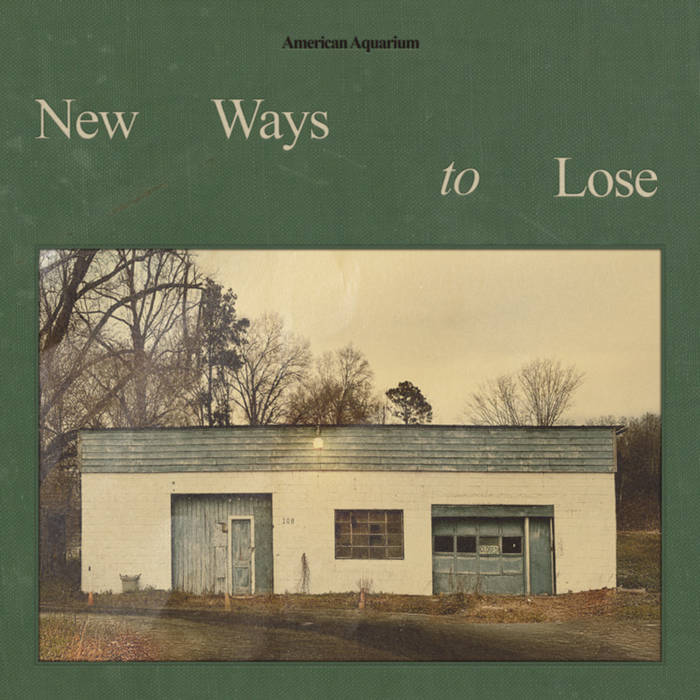
I’ve had the opportunity to see BJ or American Aquarium twice since New Ways To Lose was finished, hearing acoustic and full-band versions of many of these songs before the record was released. By the time the studio versions arrived, they already felt familiar, almost like returning home after hearing the stories around a campfire.
One thing BJ continues to do better than almost anyone writing today is observe the overlooked corners of America.
“Dollar General” isn’t really about Dollar General. It’s about the slow hollowing out of small-town America. It’s about places where the biggest new business in town isn’t a factory or a grocery store but another discount chain, and even it is struggling. It’s about communities surviving instead of thriving. Bruce Springsteen has long been the gold standard for writing about working-class America without looking down on it. BJ Barham is the closest songwriter I’ve heard to carrying that torch into this generation.
“History Repeats Itself” explores similar territory, though it sneaks in under the cover of an infectious piano line. The melody almost disguises what the song is really saying. That’s become one of BJ’s greatest strengths. His songs diagnose problems honestly without drowning in despair. They’re protest songs that never become sermons. They don’t tell you everything is fine. They tell you it doesn’t have to stay this way.
Then comes “Can’t Into Could.”
For me, it’s the defiant heartbeat of the record.
The song immediately reminded me of something I’ve kept for years: a Word document on my computer simply titled “Fuck You.” It’s exactly what it sounds like. A running collection of dismissive comments, insults, and predictions from people who told me I couldn’t do something or wouldn’t amount to much. I don’t keep it because I dwell on it. I keep it because every now and then it’s worth remembering where some of the fuel came from.
That’s what “Can’t Into Could” feels like. A refusal to accept the limits someone else tried to place on you. It’s a middle finger without becoming vindictive. BJ has always been good at turning scars into resolve instead of self-pity, and this song sits comfortably among his best examples.
Of course, this is still American Aquarium. You come to these records expecting at least one song that’s going to reach into your chest, squeeze your heart until it quits beating for a second, and then politely hand it back.
This time it’s “Favorite Hello.”
The subject isn’t addiction. Or divorce. Or broken dreams.
It’s losing a dog.
That shouldn’t surprise anyone who’s followed BJ’s career. He’s always understood that grief doesn’t grade itself. The loss of a faithful companion can leave the same crater as any other kind of heartbreak. Having heard him introduce the song live, though, gives it even more weight. His story about Buehler has become one of my favorite moments of the current live show, because it naturally flows into the origin story of BJ and Rachel, the woman who helped rewrite so much of his life. If redemption has been the overarching story of the last several American Aquarium albums, Rachel has become one of its central characters.
Another emotional gut punch arrives in “Just Like You.”
It’s a song about seeing the faces of people you’ve lost reflected in the faces of the next generation. If you’ve ever lost someone too early, this one isn’t just touching. It’s dangerous.
It’s the kind of song you immediately want to send to a friend who’s been through the same thing.
Then you stop yourself.
Because they deserve a warning first.
Don’t text them a Spotify link out of nowhere on a Tuesday afternoon. Tell them to wait until they’re home. Tell them to have thirty minutes. Tell them to be prepared. Some songs ask for your attention. This one asks for your emotional availability.
And then there’s “Twin Flames.”
It’s one of the rare, straightforward BJ Barham love songs. Twenty years into his career, he might finally have enough of those to fill half an album. Hey, we are getting closer to being a wedding band!
The sentiment is beautiful, a promise of finding each other across lifetimes.
I hate to ruin it, but slow the arrangement down, move it into a minor key, and suddenly it becomes less “eternal soulmates” and more “restraining order.” The lyrics don’t change. The context does. It’s a funny reminder of just how much production shapes the way we interpret a song.
More than anything, New Ways To Lose feels like another chapter in watching BJ Barham grow older without growing softer. The anger is still there. The social observations are still sharp. The heartbreak still hurts. But there’s also gratitude now. Stability. Family. Perspective.
Those aren’t signs that he’s lost his edge. They’re signs he’s survived long enough to sharpen it differently.
Right now, New Ways To Lose sits alongside Johnny Blue Skies’ Mutiny After Midnight as my favorite albums of the year. They couldn’t be more different sonically, but they’re chasing the same thing: truth. One does it through swagger, genre-hopping, and controlled chaos. The other does it through empathy, observation, and the quiet wisdom earned from living long enough to know what really matters.
Either way, they’re both going to be awfully difficult to knock off the top of my year-end list.
Standout tracks:
“Can’t Into Could,” “Dollar General,” “History Repeats Itself,” “Favorite Hello,” “Just Like You,” “Twin Flames.”

