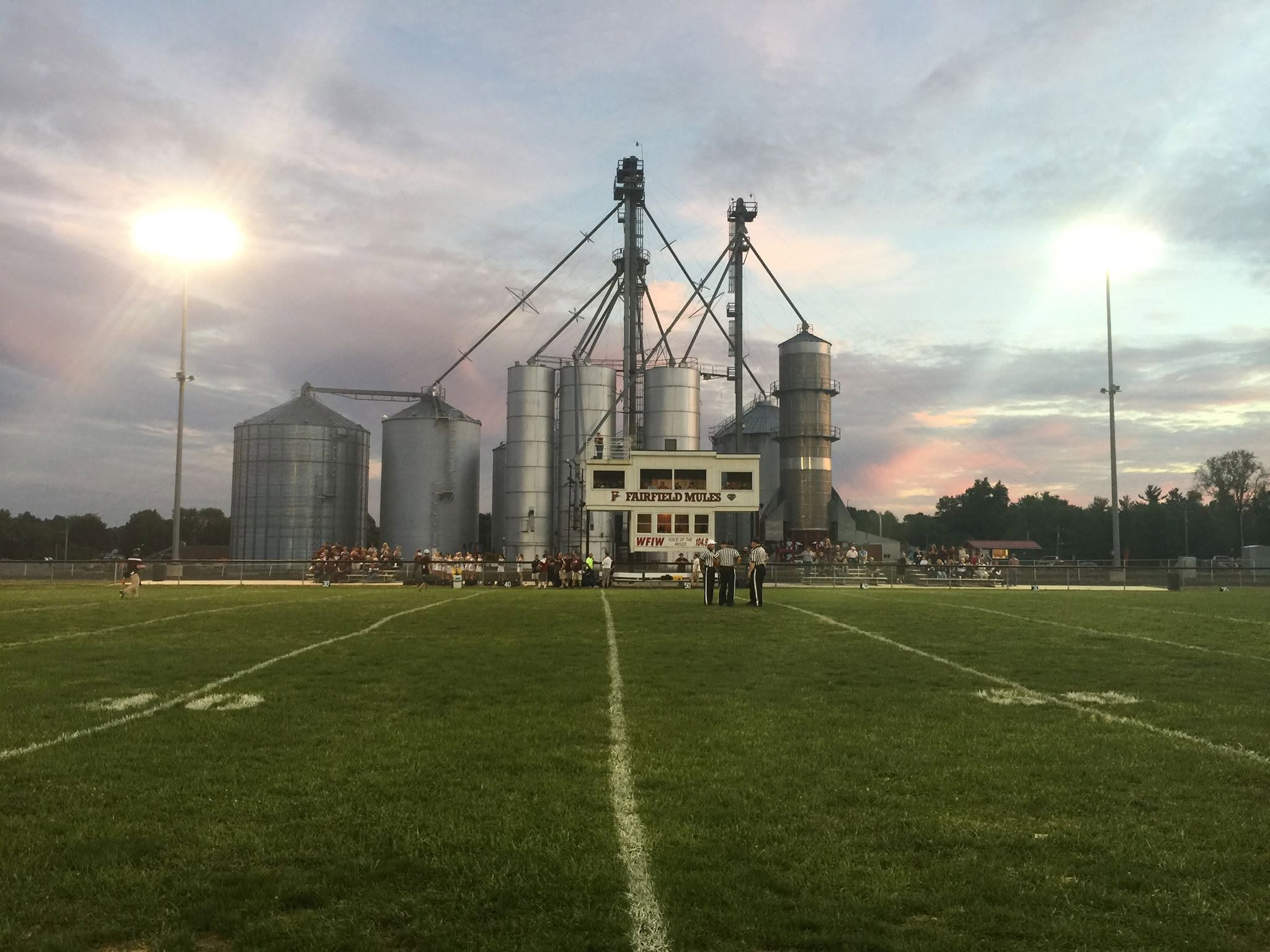
I am a Gen X sportswriter, which means my pregame music should probably be much more predictable than this.
I grew up in the age of Jock Jams, stadium rock and songs specifically engineered to make a gymnasium full of teenagers lose their minds. AC/DC was sitting right there. So was “Pump Up the Jam.” “Welcome to the Jungle.” “Thunderstruck.” Pick your poison. There are about 500 songs from my formative years that make more obvious sense as the soundtrack for a Friday night football game.
Instead, every Friday during football season, somewhere on the road between Fairfield and whatever small Illinois town I am headed to that night, I listen to J. Roddy Walston and the Business sing “Brave Man’s Death.”
Every time.
And I am not entirely sure I consciously chose it as a tradition. Somewhere along the way, it just became one.
That probably makes sense, because “Brave Man’s Death” is not really a hype song. It has plenty of energy. Walston sounds like he is trying to beat a confession out of a piano. But the song is not about winning, domination or convincing yourself that nobody can stop you.
It is about something heavier. Family. Shame. Work. Regret. Masculinity. Mortality. The things handed down to us by the people who came before us, including some things we probably would have preferred they kept.
And buried inside all of that is one of the simplest ideas I have ever heard in a rock song:
“Life was worth the pain.”
That is probably the line that explains the whole thing for me.
The song spends several minutes wrestling with what it means to live and die like a man. Not the cartoon version of manhood where toughness means never hurting, never crying and never admitting fear. In fact, the narrator inherits some pretty damaged ideas about masculinity and carries plenty of his own failures.
But the question underneath all of it is compelling: When your turn here is over, what kind of life will you have lived?
The repeated desire for a “brave man’s death” sounds, to me, less like wanting to die spectacularly than wanting to have actually lived deliberately. To have spent yourself on something. To have scars and mistakes and stories instead of simply slipping quietly through the world.
There is a line about a willing heart and a body ready to go to war while the head retreats home. That contradiction feels deeply human. Courage is rarely the absence of the voice telling you to stay comfortable. Usually courage is hearing that voice perfectly well and going anyway.
Maybe that is why the song fits my Friday nights better now than “Thunderstruck” ever could.
I am 47 years old. I have been covering high school sports for a long time. There is nothing particularly glamorous about loading up a laptop, notebook and camera equipment, driving an hour across southern Illinois, standing on a sideline for three hours, interviewing a coach, driving home and writing a football story while much of the sane world is asleep.
I am also fully aware that I am not the one playing the game. This is not my Friday Night Lights fantasy. Nobody is running through a banner because the sportswriter showed up.
But I think there is dignity in showing up anyway.
That has become one of the recurring themes of my life, whether I am writing, coaching athletes at Asgard, doing my regular job or training myself. Master the basics. Do the work. Repeat the habits. Build something slowly. Then get up tomorrow and put another brick on it.
There is very little soundtrack-worthy drama involved. Most meaningful things are probably built that way.
Friday night football has that same quality. We package it in marching bands, helmets, lights and scoreboards, but underneath all of that pageantry are hundreds of ordinary acts of commitment. Kids lifting weights in June. Coaches watching film. Parents driving to practices. Volunteers working concession stands. Somebody painting lines on a field.
And one aging sportswriter driving across Illinois again. That is why I do not need my pregame song to tell me that I am about to kick somebody’s ass. I need something that reminds me why showing up matters.
There is another reason the song fits those drives. High school sports make time visible in a way most things do not. Every August, another group of kids runs onto the field. Every November, another group walks off it for the last time. The freshmen become seniors faster than seems reasonable. Then suddenly their younger brothers are playing. Then you realize you covered their parents. Seasons become measuring sticks.
They quietly remind you that your own clock is running too. That sounds depressing. I do not think it is. Mortality can either make life meaningless or make every ordinary piece of it more valuable.
“Brave Man’s Death” chooses the second option.
Spend the cup. Do the work. Love people. Screw things up. Carry some scars. Keep going.
And when the bill eventually comes due, hopefully you can look backward and decide that life was worth the pain.
And here is the thing. None of this may have been what was in Walston’s head when he wrote this song. But it is what is in my head when I hear it. That is what great music does. It makes you explore what is inside your head, not the author’s.
But also, Thunder….da dada dadadaa dada….Thunder!
So somewhere on an Illinois highway this fall, probably with a white Monster in the cup holder and football notes bouncing around the passenger seat, J. Roddy Walston will start pounding that piano again.
There will be no inflatable tunnel. No smoke machine. No linebacker waiting for me to lead him onto the field.
Just another Friday night. Another football game. Another story to write. And, for however many of those I have left, I intend to keep showing up.